

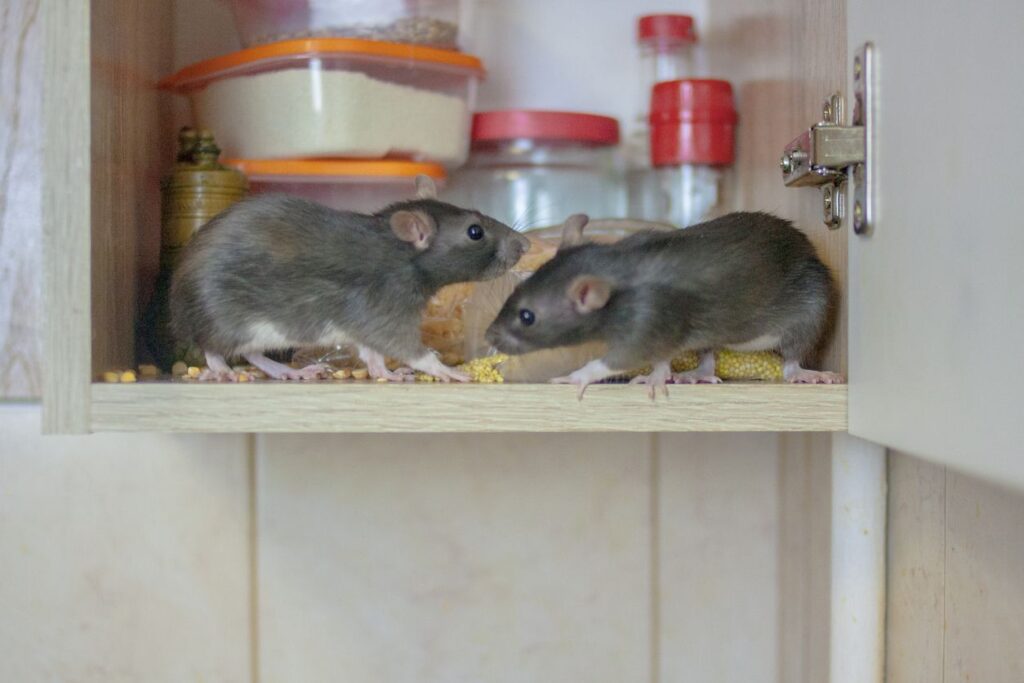
If they suspect rats, the goal is simple: spot the signs early, reduce risk immediately, and arrange professional rat pest control before the problem spreads to neighbouring rooms or properties.
Is there fresh rat droppings in cupboards, drawers, or along walls?
Fresh droppings are one of the clearest early signs that indicate a need for rat pest control Sydney services. They often appear where rats travel, such as along skirting boards, behind appliances, inside pantries, and under sinks.
Rat droppings are usually dark, pellet-shaped, and found in clusters. New droppings look moist and shiny, while older ones turn dry and dusty. If they find droppings near food items or prep areas, it should be treated as a hygiene risk straight away.
Can they hear scratching, scurrying, or squeaking at night?
Rats are typically most active after dark, especially in quiet homes. If they hear scratching in walls, ceiling cavities, or under floors at night, it often indicates movement along established nesting routes.
Scurrying sounds can become more obvious during colder or wetter weather when rats move indoors for warmth and shelter. Noise does not always mean a large infestation, but it does suggest they are inside the structure, not just in the yard.
Are there gnaw marks on food packaging, timber, or wiring?
Rats gnaw constantly to wear down their teeth. This means they can chew through cardboard, plastic containers, soft timber, and even electrical wiring.
Fresh gnaw marks look light-coloured and rough, while older ones darken over time. Chewed wires are a serious concern because they can increase fire risk. If they notice bite marks near the meter box, roof space, or behind kitchen appliances, professional inspection becomes urgent.
Do they notice grease marks or rub tracks along edges?
Rats tend to travel the same routes repeatedly, usually hugging walls and edges. Over time, their fur and skin oils leave dark smudges and greasy streaks along skirting boards, corners, pipes, and entry points.
They may also spot worn “runways” in dusty areas, like garage corners or loft spaces. If they sprinkle a little flour along a suspected path overnight and see tracks in the morning, it can help confirm activity.
Is there a strong, unpleasant smell that will not go away?
A persistent musky odour can indicate rats are nesting nearby. The smell may come from urine, droppings, nesting materials, or a dead rat in a wall cavity or roof void.
They may notice the odour is strongest in enclosed areas like laundries, under stairs, cupboards, or ceiling spaces. If the smell appears suddenly and intensifies, it can suggest heavy activity or a carcass, both of which should be handled safely.
Are there nests made from shredded material in hidden spots?
Rats build nests using whatever is available, including shredded paper, insulation, fabric, and dried plant matter. Common nesting sites include roof voids, behind stored items, under decking, and in cluttered garages.
They may find small piles of torn material tucked into corners or inside boxes that have not been opened in a while. Nesting is a sign they are not just passing through. It suggests they have established themselves and will likely breed if not removed.
Are pets acting strangely around certain areas?
Cats and dogs often notice rats before humans do. If pets stare at one spot, paw at walls, sniff under cupboards, or become unusually alert at night, it can point to movement behind surfaces.

Pets may also become fixated on roof spaces, floor vents, or laundry areas. While pet behaviour alone is not proof, it becomes meaningful when paired with droppings, smells, or noises in the same locations. Click here to get about termite Sydney: why coastal properties are at higher risk.
Do they need professional rat pest control in Sydney now?
If they see more than one sign, the safest assumption is that rats are active and established. DIY baits and traps can help in minor cases, but they often miss hidden nests, entry points, and secondary activity in roof voids or subfloors.
Professional rat pest control in Sydney typically focuses on locating entry points, identifying harbourage areas, using controlled treatment methods, and advising on prevention. Acting early is usually cheaper, faster, and far less disruptive than waiting until damage or contamination becomes obvious.
FAQs (Frequently Asked Questions)
What are the early signs of a rat infestation in Sydney homes?
Early signs include fresh rat droppings in cupboards, drawers, or along walls; scratching or scurrying noises at night; gnaw marks on food packaging, timber, or wiring; grease marks or rub tracks along edges; a strong musky odour that won’t go away; nests made from shredded materials in hidden spots; and unusual pet behaviour near certain areas.
Why is it important to address rat infestations promptly in Sydney properties?
Rats can cause significant damage by gnawing on property and electrical wiring, contaminate food sources, spread diseases, and their infestations often escalate quickly. Early detection and professional pest control prevent damage spreading to neighbouring rooms or properties and reduce health risks.
How can I identify fresh versus old rat droppings?
Fresh rat droppings are typically dark, pellet-shaped clusters that look moist and shiny. Over time, these droppings dry out and become dusty. Finding fresh droppings near food preparation areas is a serious hygiene concern requiring immediate action.
What role do pets play in detecting rats inside the home?
Pets like cats and dogs often notice rats before humans do. If they stare at certain spots, paw at walls, sniff under cupboards, or become unusually alert—especially at night—it may indicate rat movement behind surfaces. This behaviour gains significance when combined with other signs like droppings or noises.
Why should I consider professional rat pest control services in Sydney?
Professional pest controllers can accurately locate entry points and harbourage areas, apply controlled treatment methods safely, and provide advice on prevention. DIY methods may miss hidden nests or secondary activity zones like roof voids or subfloors. Acting early with expert help is usually more cost-effective and less disruptive.
How do rats leave physical evidence such as gnaw marks and grease stains?
Rats constantly gnaw to wear down their teeth, leaving light-coloured rough marks on cardboard, plastic containers, timber, and even electrical wiring. They also travel the same routes repeatedly along walls and edges, leaving dark smudges or greasy streaks from fur oils on skirting boards, corners, pipes, and entry points.